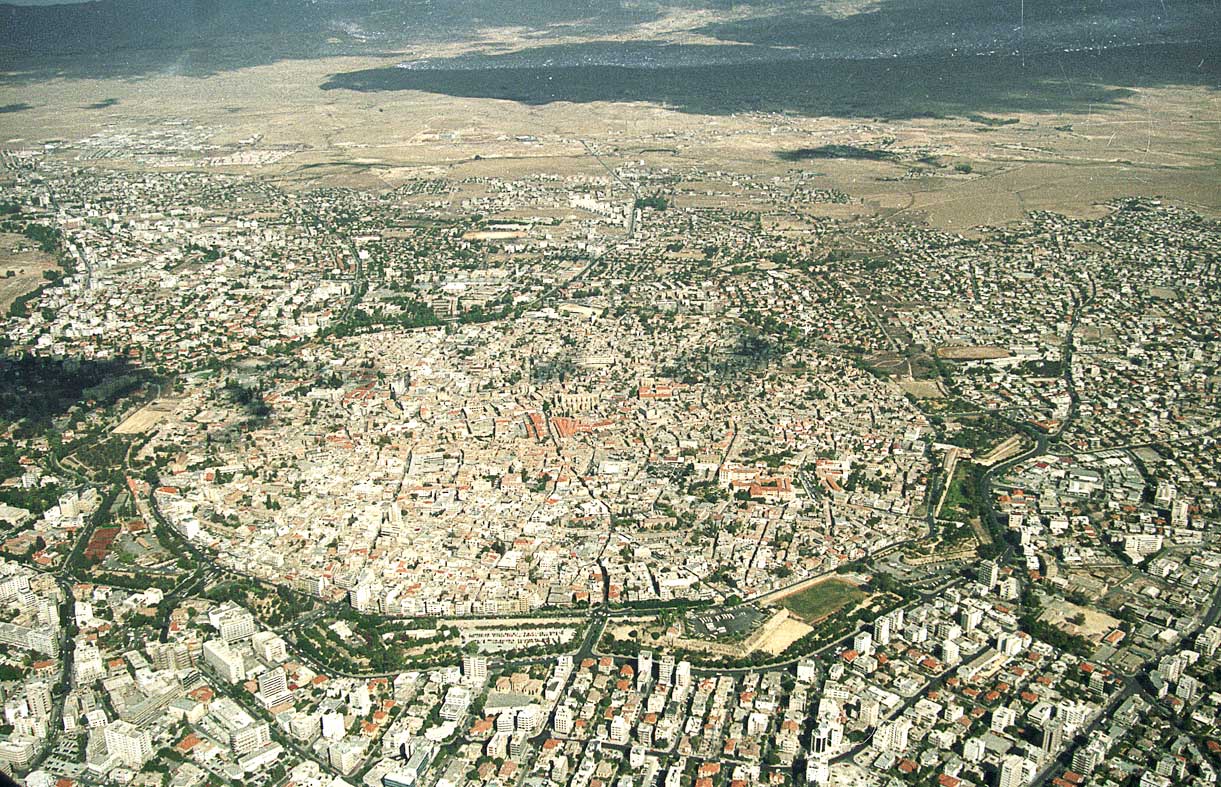
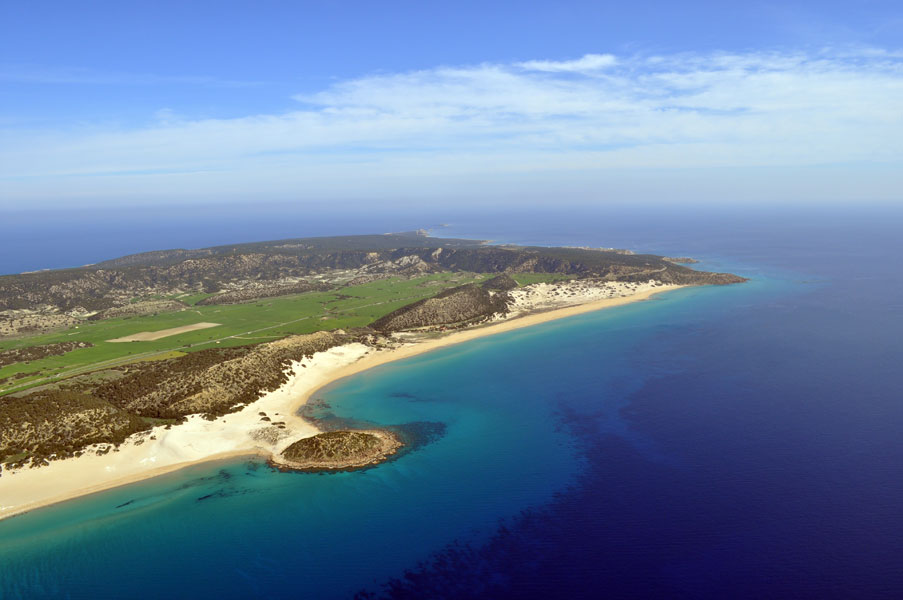
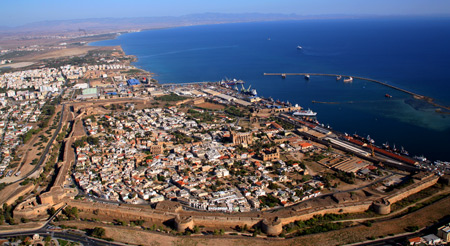
The town Famagusta, which is also known as a fortress or walled-city of Middle Age Gazi Magosa, is located in the eastern part of North Cyprus. Due to its geographical location the city is very convenient and attractive not only for the tourism, but also for the trade.
Famagusta was born in 3 century B.C. during the power of the dynasty of Ptolemaic and was flourished for a long time as a city of trade...
The most important periods in the history of Cyprus are linked with the Turkish and Venetian Empires, so the city is rich with various architectural monuments from the history of those days...
Famagusta is located on the site of Arsina. Arsina is the old ancient settlement which was established in Cyprus during the period of Ptolemaic dynasty in 3rd century B.C.. After the Arabs destruction from Arsine the surviving residents did migrate to the rich neighbouring city named Salamis (Constantia). The town started to grow up and became well-known as Ammahosta (the meaning is built on the sand). During the Dynasty of de Luizian the city name changed on the French manner and starts to pronounce as Famagusta. Under the name Famagusta the city became very well-known in Europe and still known until our days.
Famagusta has a good sea harbour, which was used by its inhabitants not only for fishing, but also for the trade purposes with the cities of Levant. In 1011 the army of the King of England Richard the Lionheart took it without resistance from the inhabitancy, because the town was poorly strengthened. During the power of Dynasty de Lusignan Famagusta was start rapidly to develop. After that the town became an important for the supply of the Crusaders in Palestine. From the Famagusta harbour were sending the fleets and the Crusades. In this time in the town was built a powerful fortress, warehouses, the stone houses of merchants and barons and a lot of churches.
In 1291 after the capture of the Arabs Ortmera in Palestine the Kingdom of the Crusaders, the escaped inhabitants start to come to Famagusta. Mostly it was people such as the monks and knights, artisans, merchants, sailors, courtesans...
Because of the new residents, the Famagusta began the new wave of powerful and big development. Kings gave to the Famagusta merchants the right of free trade. The city became the first free zone (Porto Franco) in the Eastern Mediterranean. Through Famagusta in 13 - 14 century was an enormous flow of goods from East to West. This time in the development of Famagusta City are called as a golden age of Famagusta.
In the short period of time the city became rich and shocked all travellers. Particularly impressive was incredibly large number of different nationalities in the streets of the city, they were from more than 100 countries.
In the St. Nicholas Cathedral was the coronation ceremony of kings fro dynasty of de Lusignan by crown of Jerusalem. After 1291 this ceremony was as symbolic, but it was very prestigious. In the city were built new palaces and churches. One traveller wrote that in Famagusta has many churches and chapels and the number of them is the same with numbers of the days in a year. The religiosity of local inhabitants combined with the incredible unmoral behaviour and this collaboration of two opposite behaviour was made Famagusta a very strange looking. Moreover, the vices in Famagusta have reached its highest peak and during the visiting of the city by Swedish nun Bridgit she quickly ran out in panic and called the city by New Gomorrah. Bridgit predicted fast and terrible end to this place. Her prophecies in those days were caused ridicules, but came true very quickly...
The most numerous groups of Famagusta were Genoese and Venetians, who were always against of each other. The fight started between them during the ceremony of coronation the new king by crown of Jerusalem. Later this incident turned into the bloody clashes on the streets of Famagusta. As a result many inhabitants of the city were killed and the Genoese warehouses were looted and burned. This sad episode was the start for the invasion of the island by Genoese army and starts the Genoese war in Cyprus. The captured King Peter II was exchange on the peace agreement between the kingdom of Cyprus and the Genoese. From that tine Genoese occupied the Famagusta. Famagusta was mostly destroyed and almost all the inhabitants of the city escaped, just Genoese was stay in. That was also the end of the Golden Age of Famagusta.
The city was returned to the power of the Cyprus Kings only in 1464, when the Venetians send the King James II army and siege the town by artillery forces.
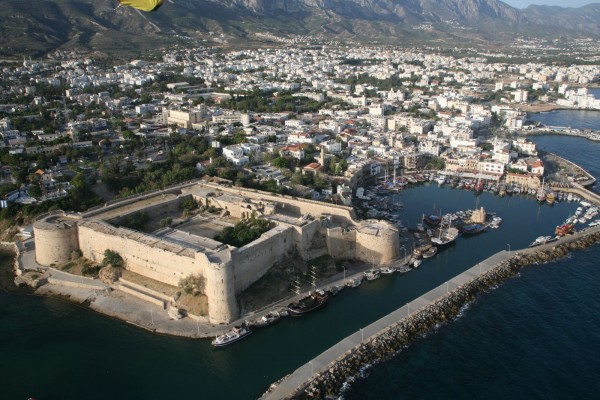
At this time the city became the most powerful Venetians military fortress in the eastern Mediterranean. The walls of fortress were fully restructured and considerably strengthened. This work began in 1562. The height of the walls was increased up to 15 - 17 meters, and their length up to 3,6 kilometres. The fortress- castle has two gates which led into: the sea gate was from the port and ground and a land gate was from the road to Lefkoşa (Nicosia). Around the walls was build a canal, which was filled with the sea water. That made the Famagusta fortress looks like an artificial island. The ability to attack Famagusta from the land became impossible.
During the war of the Venice with the Ottoman Empire, from 1570 to 1571 years, the fortress for ten month was siege by the army of Lala Mustafa Pasha. The capitulation was only when some of the bastions was turned into ruins because of the Turkish artillery fire and exploding of many underground mines. In that time the garrison lost 90% of soldiers and also run out of gunpowder. Siege of Famagusta city is one of the bloodiest chapters in the Europe history, which gives the lessons and examples of selfless, bravery and military skills of the Turkish Army and a fantastic tenacity and military cunning of the Venetians.
In the Ottoman period the fortress lost its military significance and most of the Famagusta buildings were destroyed. The city was settled by families of the Turkish soldiers. The Greek population began to settle in the southern site of Famagusta in the area of Maras (Varos). In 1774 it was the last stronghold retained the siege of the walled-city fortress Famagusta. Incide the walls the Turkish population of Famagusta and the people from the surrounding villages were found the refuge, they were run out from the attacks of the Greek Army and Greek Cypriots National Guard. The town and fortress were fired from all sides, but arrived to help the Turkish army saved the residents and poorly armed Turkish Cypriots from destruction.
Now to get into the fortress walled-city Famagusta everyone can via the old days land gates. They were built during the Ottoman Empire in 18 century. Venetian gate had a drawbridge next to the Ravelin bastion and the place where they were openings can be easily seen. Partly survived the walls of the fortress and the surrounded a deep ditch with the sea water.
Bastion Ravelin, built in 1618, is located on the top of the fortress, where today you can observe the beautiful scenery all the major historic buildings of Famagusta. Above the entrance on a marble panel inscribed a verse from the Koran. Once, there was located one of the first in Cyprus madrassa - a Muslim religious school. From the top of the Ravelin bastion you can see Lala Mustafa Pasha Mosque (St. Nicholas Cathedral) and Sinan Pasha Mosque (Church of Peter and Paul).
The main attractions around the town of Famagusta, which is recommended to visit and see:
1. Walled-city and fortress Famagusta
2. Sinan Pasha Mosque (the Church of St. Peter and St. Paul)
3. Historical centre of Famagusta - Venice Palace build by Giovanni Rivera
4. The Nestorian Church of St. George
5. Lala Mustafa Pasha Mosque (St. Nicholas Cathedral)
6. The ruins ofthe St. George Greek Cathedral and the two Byzantine churches (St. Zeon Church, St. Nicholas Church)
7. Bastion Jambulat
8. Othello Tower
9. Salamis Ruins
10. St. Barnabas Monastery